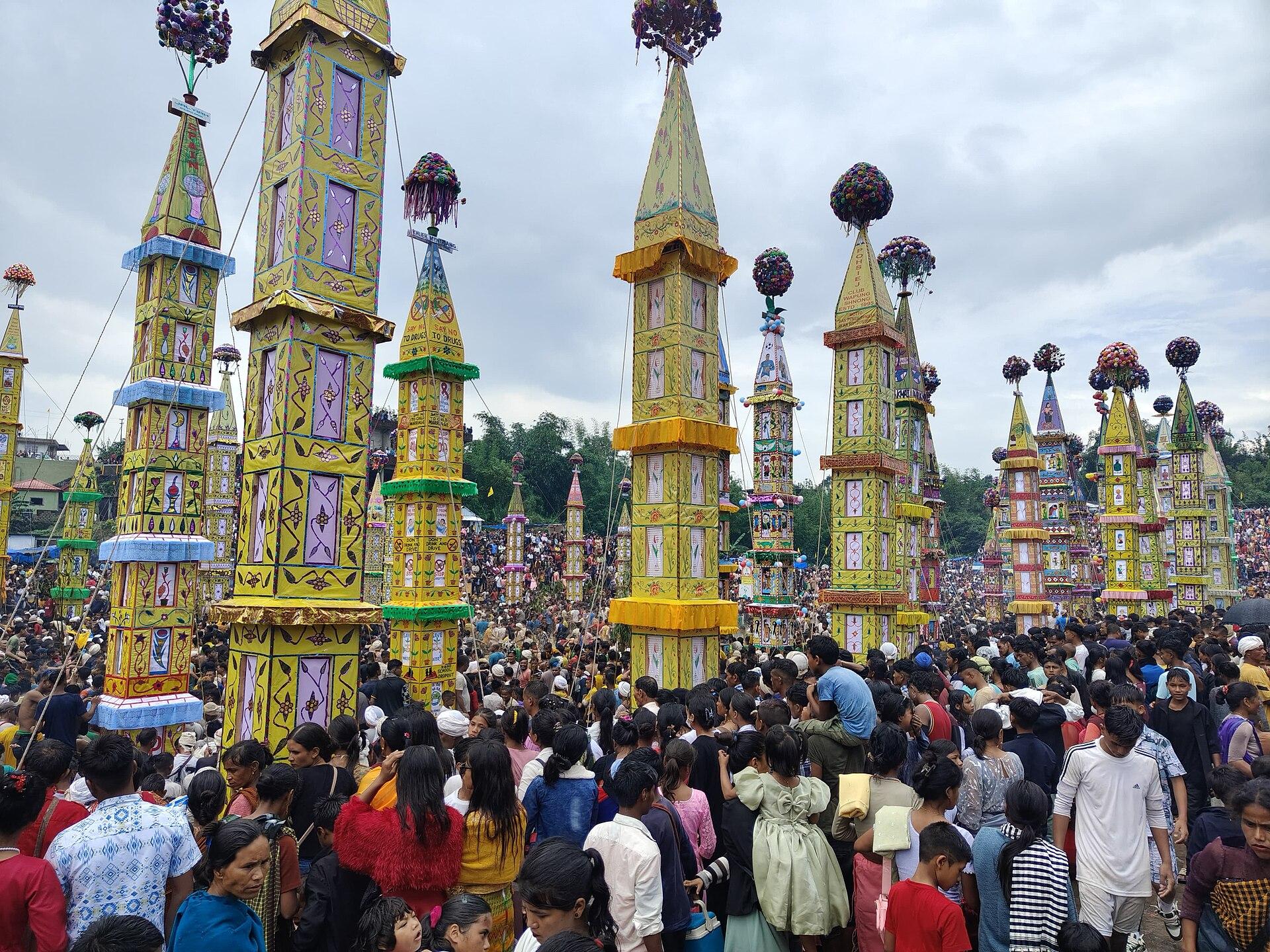
Photo: Kotinwpb, CC BY-SA 4.0
Shangpung
About
Where the name lives
2,803
people in Shangpung Pohshnong (2011 Census)
Shangpung is not a single cluster of houses but a group of neighbouring Pnar villages that share the name, set in the uplands of the Laskein block, about 21 km from Jowai.
Its people are Pnar, the hill community of the Jaintia Hills, who speak the Pnar language and are close kin of the Khasi. Shangpung is also home to Shangpung College, which serves students from the villages around it.
- District
- West Jaintia Hills
- Block
- Laskein
- From Jowai
- About 21 km
- People
- Pnar (Jaintia)
- Known for
- Lakadong turmeric
Villages that share the name
- #01Shangpung Pohshnong2,803 people
- #02Shangpung Moosyiem602 people
- #03Shangpung MissionLaskein block
Population figures from the 2011 Census of India.
History
From a Doloi land to a district of Meghalaya
- 01Jaintia kingdom
One of the twelve Doloi lands
Before British rule the hills belonged to the Jaintia kingdom, whose kings kept their hill seat at Nartiang. The hill country was divided into elakas, each led by a chief called the Doloi, and is remembered as Ka Ri Khadar Doloi, “the land of twelve Doloi”. Shangpung was one of them, alongside Jowai, Nartiang, Nongjngi, Raliang, Sutnga and others.
- 021835
Annexed by the British
The East India Company annexed the Jaintia kingdom in 1835 and brought the hill elakas under its rule.
- 031860 to 1862
The Jaintia rising
New taxes and interference with Pnar religious rites led to revolt, and in 1862 the Jaintia hills rose under U Kiang Nangbah. Local histories record that Shangpung, led by its Doloi, U Kiri, fought British troops in February 1862 and that the village was burnt in the fighting. U Kiang Nangbah was captured and hanged in public at Iawmusiang, Jowai, on 30 December 1862. He is remembered today as one of Meghalaya’s freedom fighters.
- 041972
Part of a new state
Meghalaya became a full state on 21 January 1972. Shangpung lent its name to the Sutnga–Shangpung seat in the state assembly until the constituencies were redrawn, and it is still a constituency of the Jaintia Hills Autonomous District Council.
- 052012
West Jaintia Hills
The Jaintia Hills district was divided on 31 July 2012. Shangpung is now in West Jaintia Hills, whose headquarters is Jowai.
About this history
Compiled from public sources, including census records, Meghalaya government notices and published local histories. If something is wrong or missing, please tell us.
Email a correctionBy the numbers
Shangpung at a glance
12
Doloi lands of the old Jaintia kingdom
1862
Shangpung fights in the Jaintia rising
2,803
People in Shangpung Pohshnong (2011)
21 km
From the district town, Jowai
Culture
Pnar life
Shangpung shares the customs of the Pnar across the Jaintia Hills: a matrilineal clan system, the elaka and its Doloi, and festivals tied to the farming year.
Clan and family
Pnar society is matrilineal. Children take their mother’s clan name, and the clan remains the backbone of village life, from land to marriage to the care of elders.
Behdienkhlam
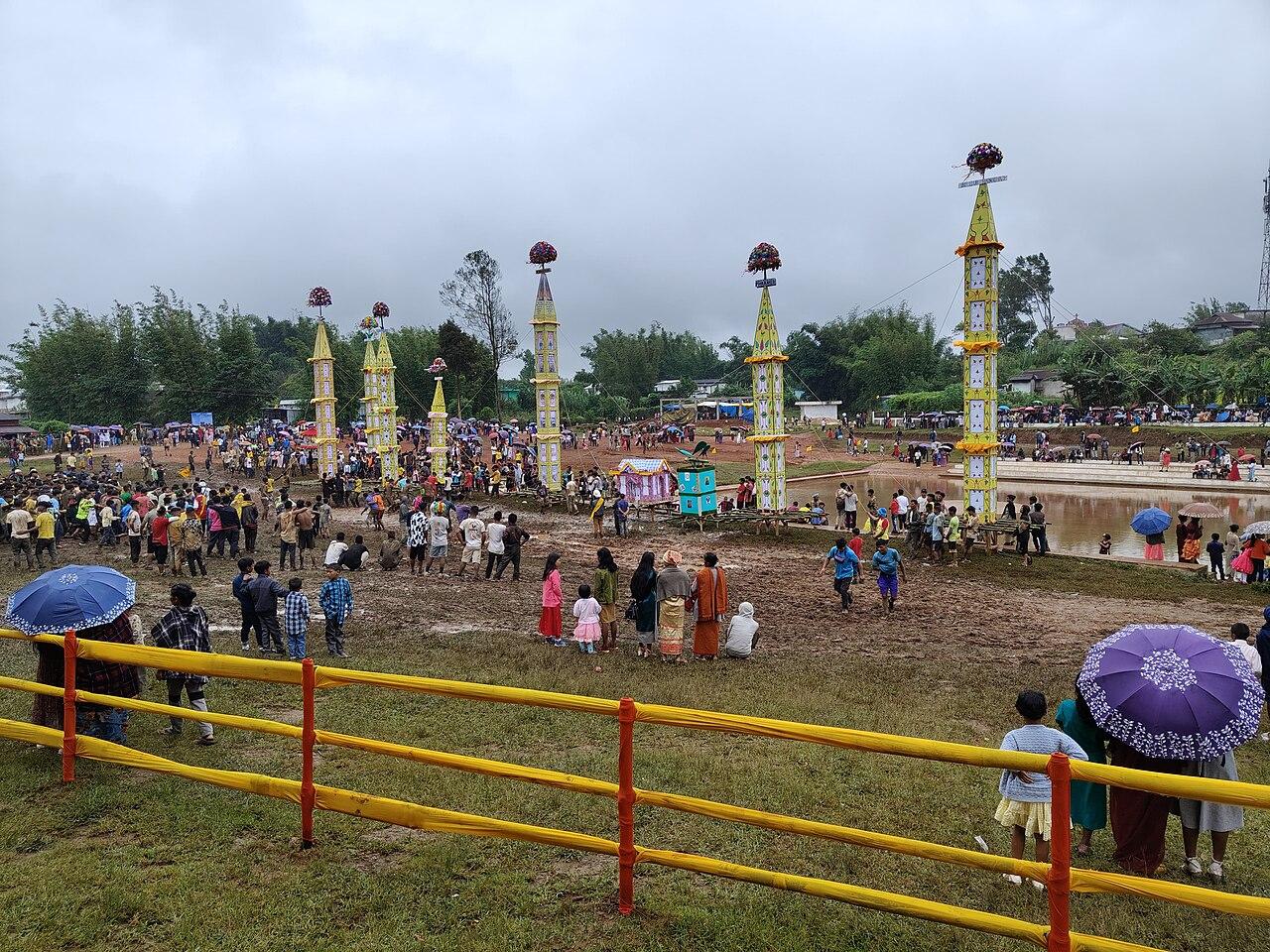
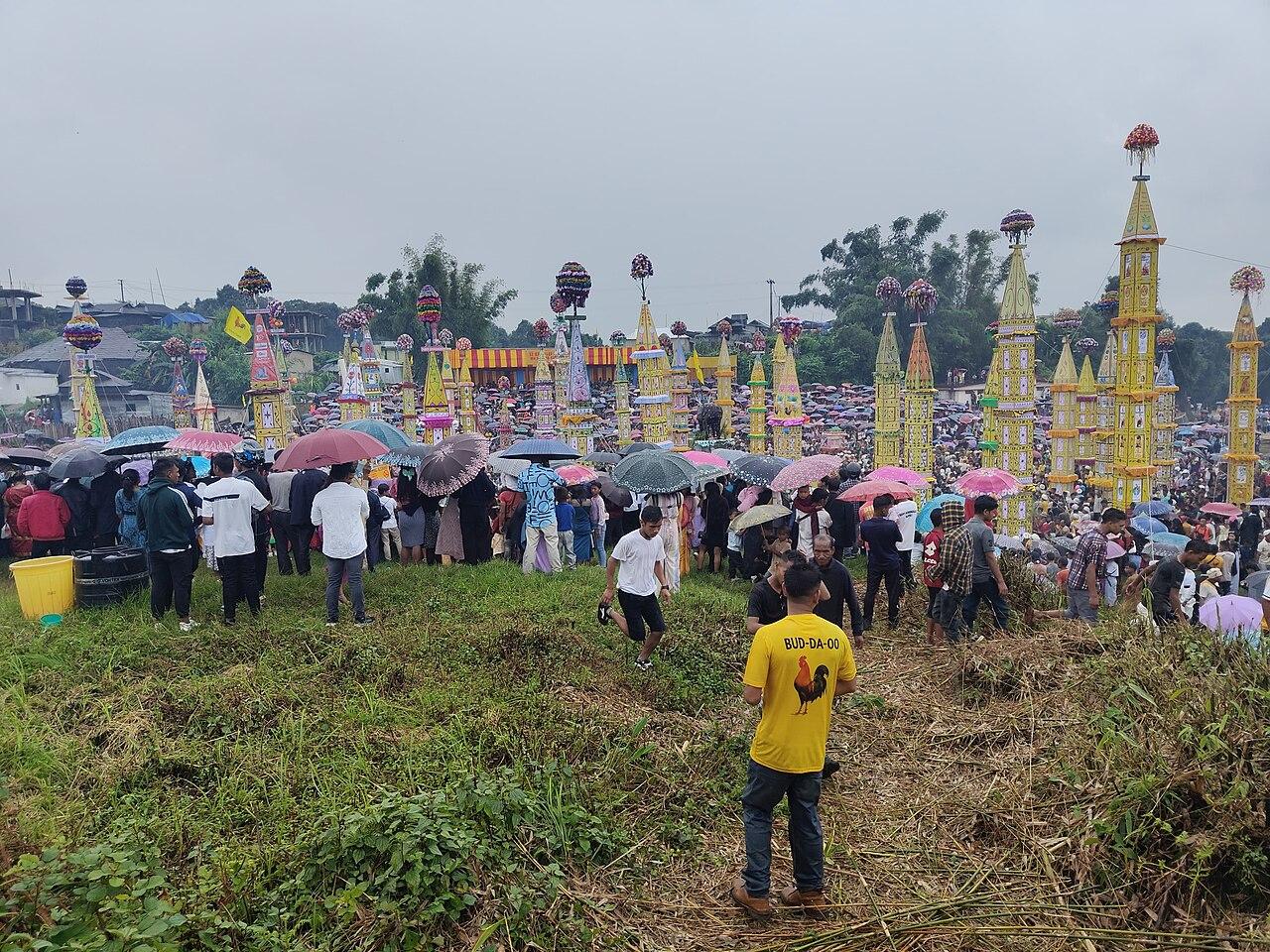
The best-known Pnar festival, held each July after sowing, when communities of the Jaintia Hills drive away sickness and pray for a good harvest. Tall decorated towers are carried and raised in its final days.
Faith
Many Pnar families are Christian, while others keep Niamtre, the traditional faith, whose rites are still led by the Doloi and priests of each elaka.
Standing stones
Monoliths raised in memory of ancestors are found across the Jaintia Hills. The largest group, at Nartiang, recalls the days of the Jaintia kings.
Farming
Lakadong turmeric
Shangpung lies in the belt of West Jaintia Hills where Lakadong turmeric is grown, a variety prized for its deep colour and high curcumin content, often quoted at 7 to 9 per cent, and protected by a Geographical Indication tag.
The Shangpung Farmers Union runs a collective marketing centre at Shangpung Pohshnong, set up under the state’s Lakadong Mission, where farmers process and sell their crop together.
7–9%
curcumin, well above most turmeric
Laskein
block, the heartland of Lakadong cultivation
Shangpung Social
What’s happening in Shangpung
News, questions and photos shared by the people who live here. Sign in to post, like and reply.
Latest on Shangpung Social
Live- TU

- SP
- SP
 1
Show moreTest User·
Soowanki S Passah·
What a wonderful day
12Soowanki S Passah·
Shangpung PWD